Unattended Death Cleanup in Orange County
Most unattended deaths in this county are discovered the same way: a neighbor notices an odor in a shared hallway, a manager gets a complaint, or an adult child in another state cannot reach a parent and asks someone to check. If that is how you arrived here, know that what you are dealing with is common, that it is not a reflection on anyone's care, and that it is entirely handleable by people who do this work.
The coastal climate matters more than people expect. Marine influence keeps Orange County far milder than the inland valleys, so decomposition progresses more slowly than it would in a hot valley home. That does not mean time is not a factor. In a sealed condo or apartment with the air conditioning running, someone living alone can go undiscovered for a long stretch, and the interior conditions inside that closed unit are what determine the scope of the work — not the weather outside.
After discovery, the property is part of a death investigation. Orange County handles this through a combined sheriff-coroner operation, and the residence is released to the family, the owner or the management company only after that investigation is complete. Cleanup is not part of what the responding agency or the coroner does. That gap surprises nearly everyone. You can call us while you wait, ask what the work will involve, and decide later.
In attached housing, an unattended death is really two questions: what happened in this unit, and what traveled. Biological material follows gravity and seams — into carpet pad, through flooring joints, into subfloor, along baseboards and into wall cavities that are shared with the residence next door. Odor moves differently, riding through plumbing chases, penetrations and connected HVAC into units that were never touched. We inspect for both. That may mean lifting flooring, opening a small inspection point, checking the unit below, or evaluating ductwork before anyone declares the job finished. Air fresheners and surface wiping do not resolve this, and in a stacked building they simply move the problem to a neighbor.
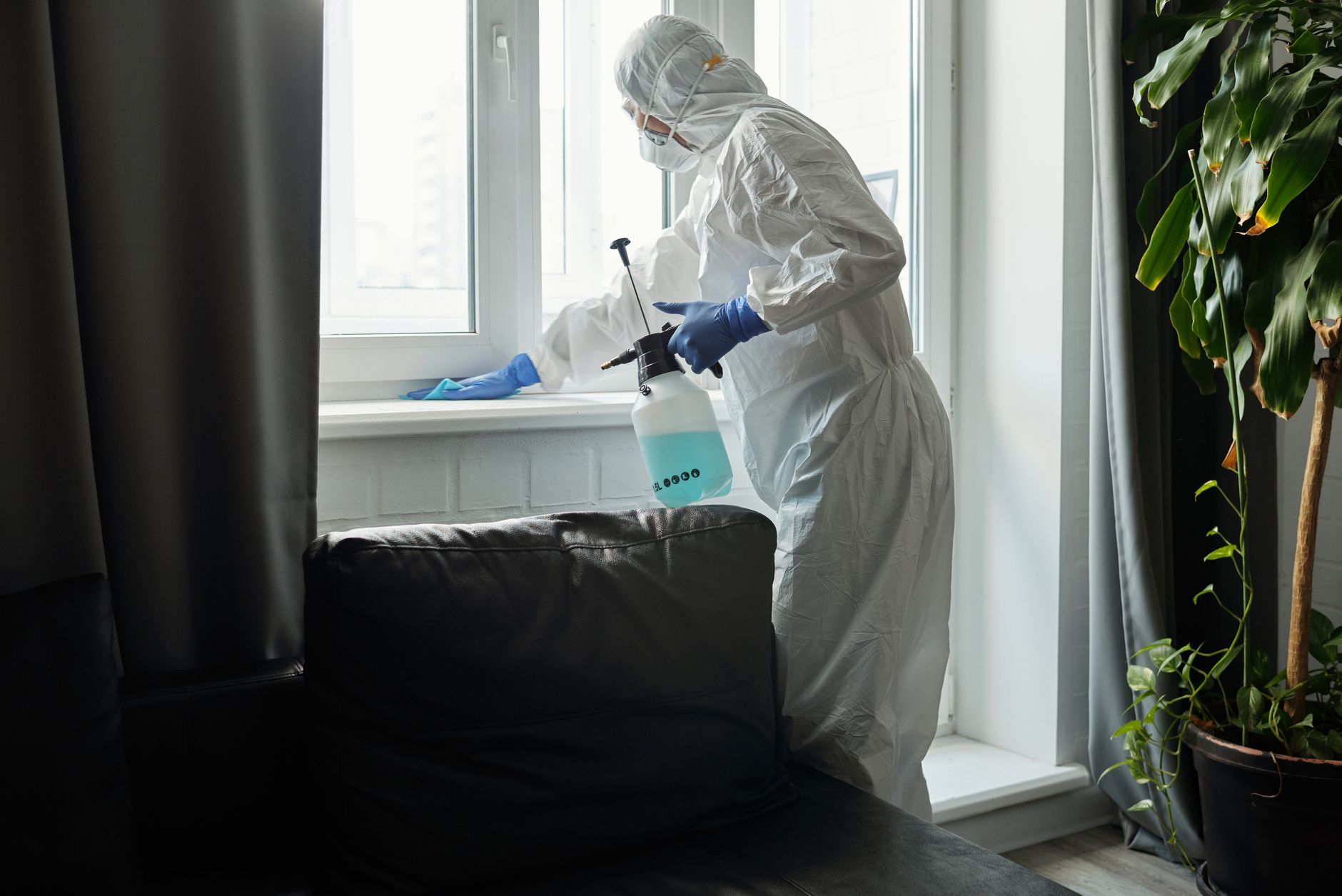
The process runs in a set order. We contain and isolate the work area and control airflow so nothing migrates during the work. Affected porous materials are removed — bedding, carpet and pad, upholstered pieces, and where necessary flooring, subfloor and sections of drywall. Structural surfaces are cleaned and disinfected, then odor is treated at the source, which often includes sealing sanitized substrate. Everything removed leaves as regulated medical waste through licensed disposal, and technicians are bloodborne-pathogen certified throughout.
Because so many of these calls involve a senior who lived alone, personal property is usually part of the conversation. We work slowly around documents, photographs, jewelry and small keepsakes, set aside what can be safely recovered, and tell you honestly what cannot be saved. If probate or an estate attorney is involved, we can supply the itemized documentation they ask for. We bill insurance directly when a policy covers the loss.
Right now, do not enter to clean and do not run fans or the HVAC system to push the smell out — that spreads odor through a shared building faster than anything else. Close interior doors if you can do so safely, keep others out, and call. If you are managing this from out of the area, we can coordinate access with a property manager, an HOA representative or a relative and keep you updated with photos at each stage.
What We Do
- Common in sealed, air-conditioned units even in this mild coastal climate
- We inspect subfloor, wall cavities and shared HVAC — not just the visible area
- Odor treated at the source so it does not migrate to neighboring units
- Careful recovery of documents, photos and keepsakes where possible
- Unmarked vehicles; discreet arrival in HOA and apartment communities
- Remote coordination for out-of-area families, with photo updates